
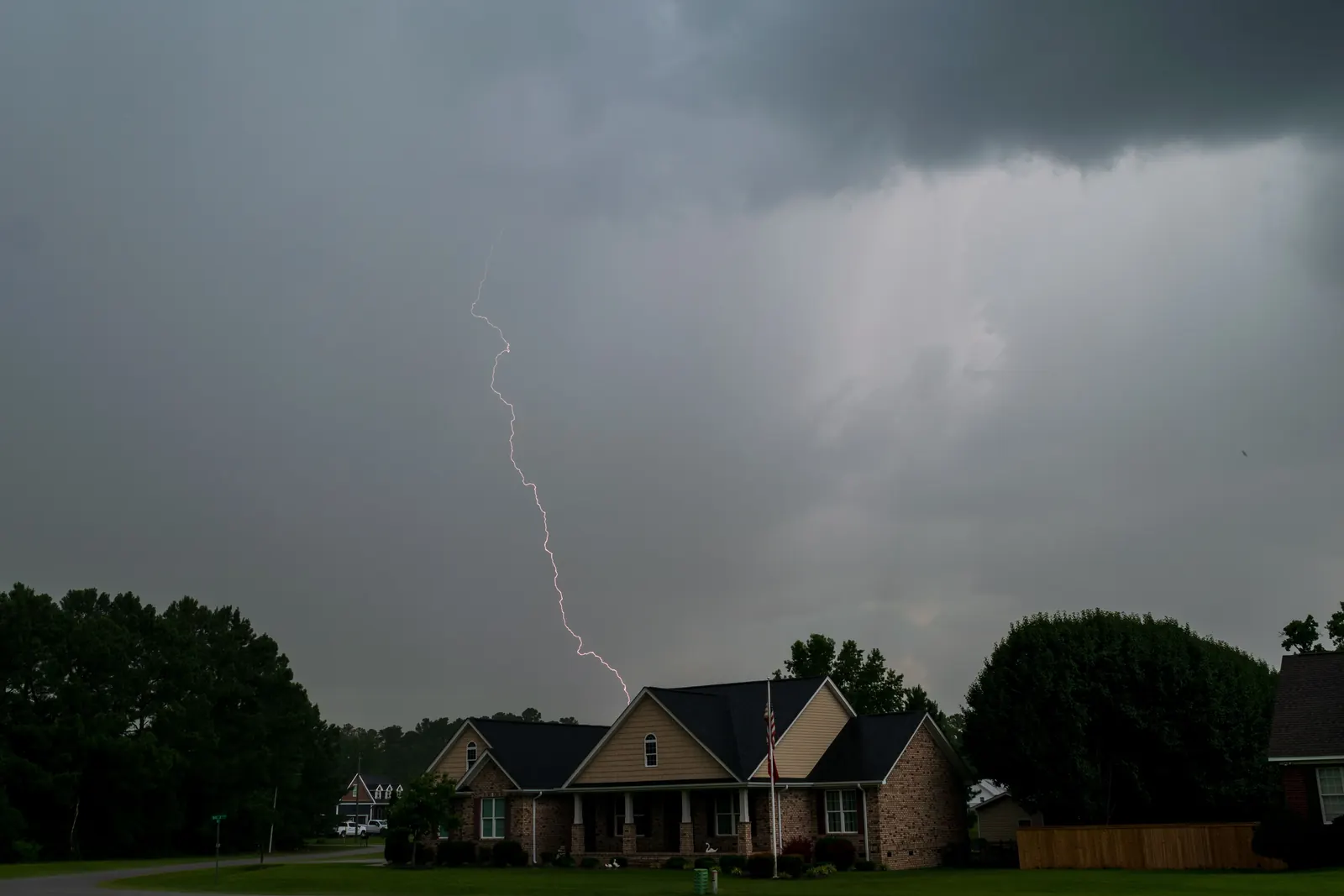
What the storm brought
Storms that began Monday, March 16, 2026 moved through overnight into Tuesday. Peak gusts reached 72 mph at JFK Airport, 71 mph in Newark, 64 mph in Keyport, and 62 mph at both LaGuardia and Harvey Cedars. The National Weather Service issued a tornado warning for parts of Monmouth and Ocean counties, and a wind advisory covered the city, Long Island and parts of New Jersey until 8 a.m. Tuesday.
Trees came down across the region. One fell on a house in South Plainfield; another cut into an upstairs bedroom in Metuchen. At 6 a.m. Tuesday, utilities reported more than 14,000 outages on Long Island and more than 12,000 for one New Jersey utility alone, and NJ Transit briefly suspended two lines because of trees on the wires.
Where wind hits a chimney hardest
A chimney is the tallest, most exposed part of most houses. The cap on top is held by a few screws or a clamp band around the flue tile, or by a bracket set into the crown. Years of rust, a cracked crown or a cap that was never fastened properly can let a strong gust lift it off or fold it over. A missing cap means rain, snow and animals have an open path down the flue.
The top few courses of brick take the most weather and are often the first to lose mortar. In a hard wind, loose bricks there can shift or fall. Old antenna mounts and straps wrapped around the stack add leverage and can crack the joints they are bolted into.
Chimneys that rise well above the roof, such as those on the gable end of a colonial or the tall stacks on a three-story rowhouse, take the brunt. A chimney that has lost mortar at the roofline, or that has a slight lean, carries more risk because the wind load is focused at that weak point. Leaning stacks and cracked joints at the roof line deserve attention after any storm with gusts this strong.
Downdraft and smoke after a windy night
Strong wind across a roof can push air down a short chimney or one sitting below a nearby ridge or taller building. Homeowners notice it as smoke puffing into the room, a cold draft from the fireplace, or a gas appliance that will not stay lit. A properly sized cap designed for wind can help, as can extending a chimney that sits too low for the roofline. Persistent downdraft on a flue serving a boiler or water heater is a carbon monoxide concern and should be checked.
Checking from the ground
After a storm like this, walk around the house and look up. A cap sitting crooked or missing, a brick lying on the roof or in the gutter, a gap where the chimney meets the roof, or flashing that has peeled back are all worth a call. If a tree or large limb struck the roof near the chimney, have the chimney looked at even if it appears intact; the impact can crack the crown or shift the stack at the roofline.
Want a professional look? See our chimney cap installation service, or call (844) 468-2410 for a free written estimate.

