
What the week covered
The National Weather Service office in State College set aside November 1 to 6, 2026 as Winter Weather Awareness Week in Pennsylvania, with Snow Squall Awareness Week following on November 9 to 13. Topics ran through winter storm preparation, what each type of alert means, snow and snow squalls, ice, winter flooding, reporting conditions, and cold.
Some points stood out. Even a thin glaze of ice is dangerous on roads and walks, and bridges and overpasses freeze first. Ice can bring down trees and power lines. And for drivers stuck in a car, the advice was to run the engine and heater for a few minutes each hour, crack a window, and keep the tailpipe clear of snow to avoid carbon monoxide.
The same carbon monoxide logic at home
The tailpipe advice has a direct match in the house. Every fuel-burning appliance needs a clear path for its exhaust. For a fireplace, stove or older boiler, that path is the chimney; for many newer furnaces, boilers and water heaters, it is a plastic or metal pipe through the side wall. Snow drifting against a wall, or a flue cap frozen over with ice, can block that path in the same way snow blocks a tailpipe.
CO alarms on each level and outside sleeping areas, with battery backup, are the warning system. If one sounds, get everyone out first, then call 911.
Ice storms and outages
In the Philadelphia suburbs and across the state, the storms that do the most damage are often ice, not snow. Ice-laden branches fall on roofs and lines, and outages can last days. That is when fireplaces and wood stoves get used hard, sometimes for the first time in years, and when portable generators come out.
A fireplace that has not been inspected may have a blocked flue, a damper that will not open fully, or creosote from past seasons. Generators belong outdoors, well away from doors and windows, not in a garage or basement.
Getting the chimney ready for that week
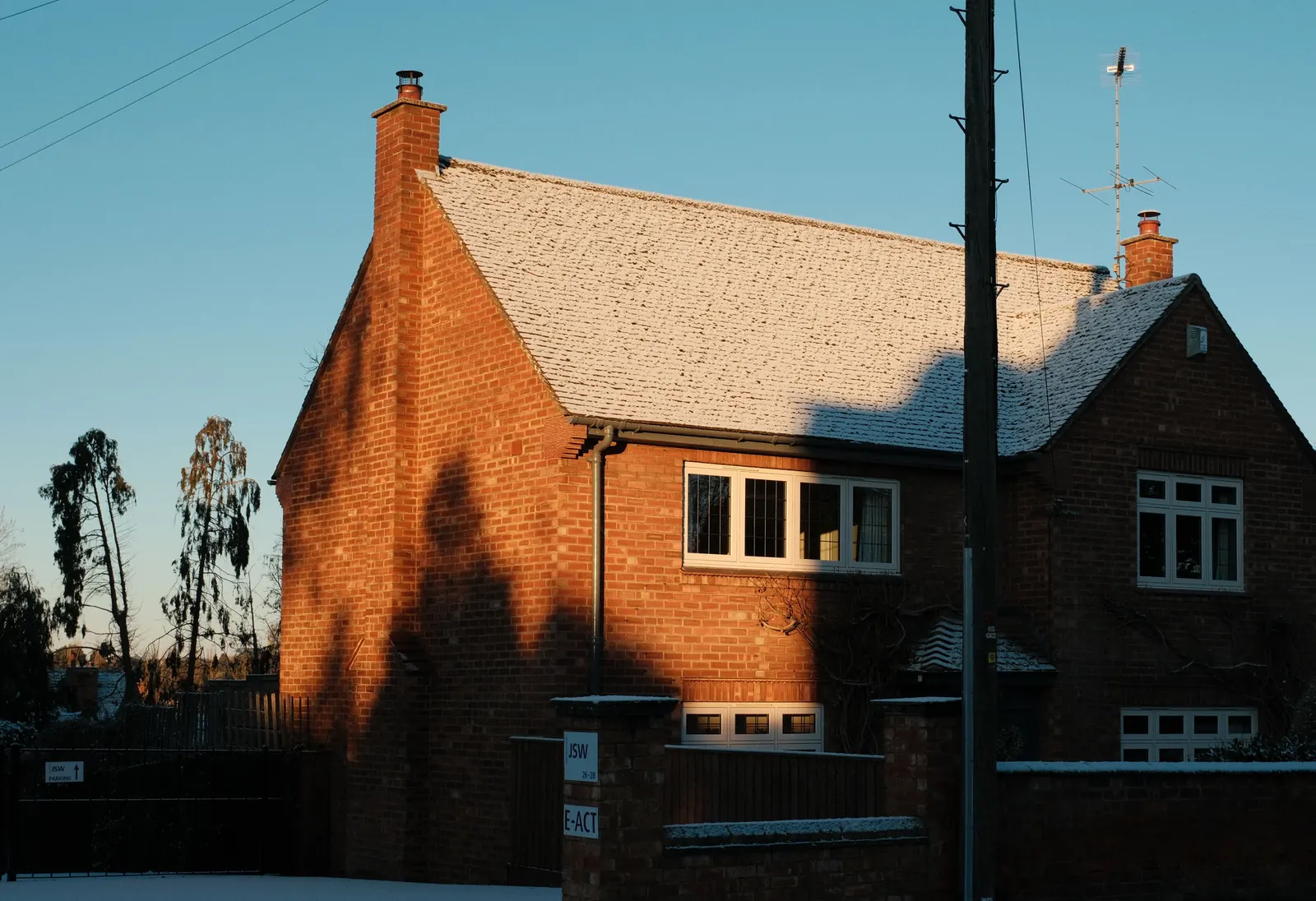
The time to find out whether a fireplace can carry the house through an outage is before the ice arrives. A sweep and inspection confirm the flue is clear and sound, the damper works and the cap is in place. Ice on the roof can also bend a cap or crack a crown, so it is worth a look from the ground after any ice storm.
Snow squalls bring a different risk. They hit fast, with sudden heavy snow and strong gusts, and can coat a chimney top with snow and ice in minutes. A cap with fine mesh can ice over in those conditions, and a fireplace or stove running at the time may begin to smoke into the room. If that happens, let the fire burn down and avoid adding fuel until the draft returns.
Want a professional look? See our chimney inspection service, or call (844) 468-2410 for a free written estimate.

