
The storm, by the numbers
Snow began on Sunday, January 25, 2026 and piled up to 9.1 inches at Philadelphia International Airport, the largest total there since the blizzard of January 2016, per the National Weather Service. Later in the day the snow changed to sleet and freezing rain. The governors of Pennsylvania, New Jersey and Delaware had all declared states of emergency, and the city put an Enhanced Code Blue in place.
Then came the cold. The Mount Holly forecast called for Monday's high of 29 degrees to be the warmest of the week, with lows in the single digits and as low as 2 degrees by Thursday night. Overnight wind chills were expected between zero and minus 10 in most areas.
Why sleet on top of snow matters for masonry
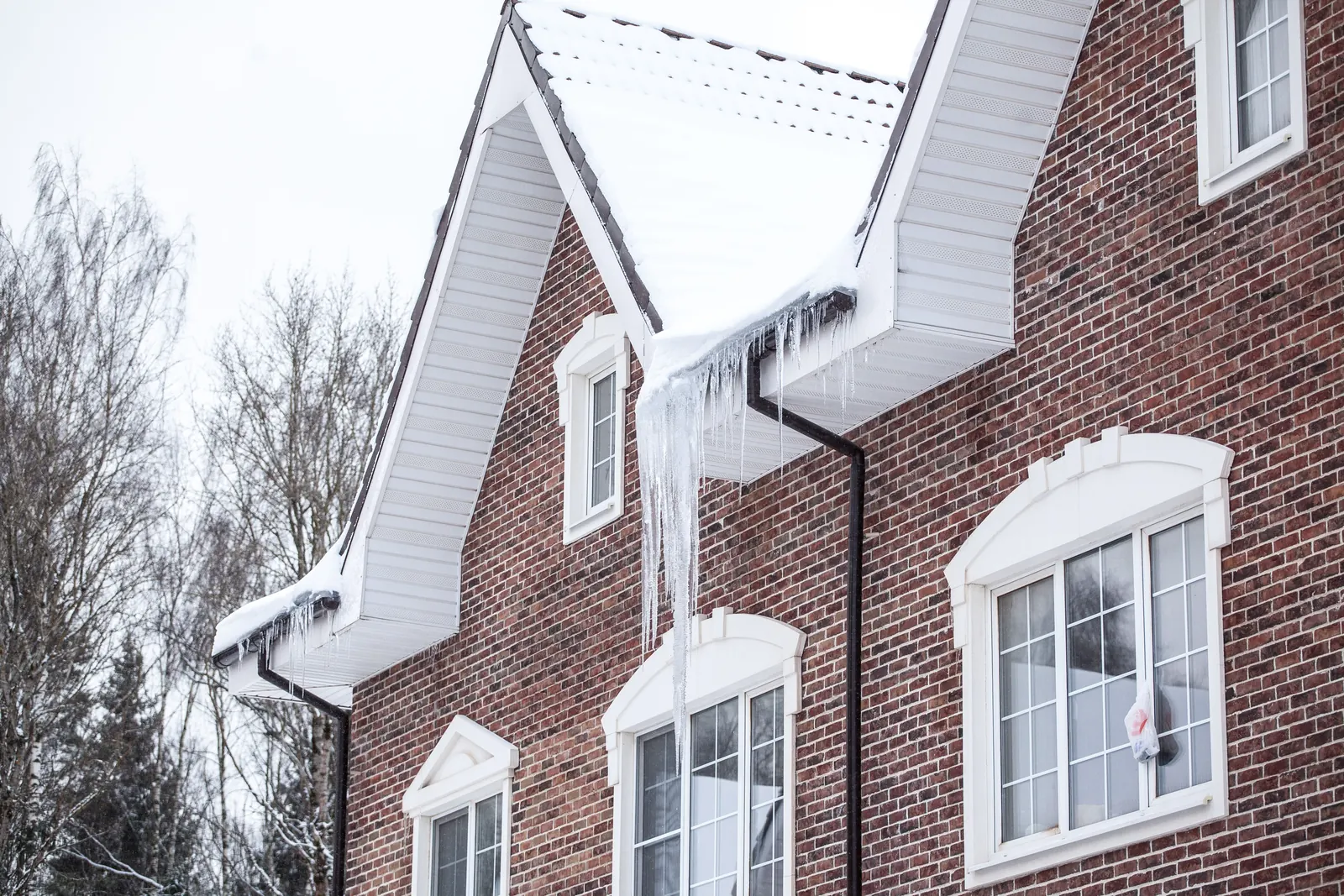
Sleet and freezing rain glaze the snow already sitting on a chimney crown and on the roof around the stack. That glaze seals the snow in place, so it melts slowly from below rather than blowing off. Meltwater runs into any crack in the crown wash and down into the brick core, then freezes overnight.
Water expands by roughly a tenth of its volume when it freezes. In a sound crown that does little. In a crown that already has a hairline crack, every freeze opens it further, and after a hard week the crack can reach the flue tiles or the top course of brick. Brick face that pops off in thin sheets, a condition masons call spalling, is the visible result a season or two later.
Rowhouse roofs and the flashing joint
Much of Philadelphia's housing is rowhouses with low-slope roofs and chimneys shared along party walls. On a flat or nearly flat roof, snow and ice sit around the base of the chimney with nowhere to drain until the thaw. The flashing at that joint, and the counter-flashing set into the mortar above it, is what keeps the water out. Where the membrane was simply tarred up to the brick, the first long thaw after an ice event is when a leak usually appears.
Ice can also collect inside the top of the flue on a chimney that serves a gas or oil heater, especially an oversized flue where exhaust cools quickly. That ice narrows the opening right when the heater is running hardest.
What to look for after the thaw
Stains on the top-floor ceiling near the chimney, damp plaster on the chimney breast, white powder on the brick, and small pieces of brick or crown on the roof all point to water that got in during a storm like this. None of them fix themselves, and the next freeze makes each one larger.
Repairs to the crown and flashing wait for warmer weather, since mortar and concrete need temperatures above freezing to cure. In the meantime, a temporary measure such as a tarp is a job for a roofer or chimney crew with proper equipment, not for a homeowner on an icy roof.
Want a professional look? See our chimney crown repair service, or call (844) 468-2410 for a free written estimate.

